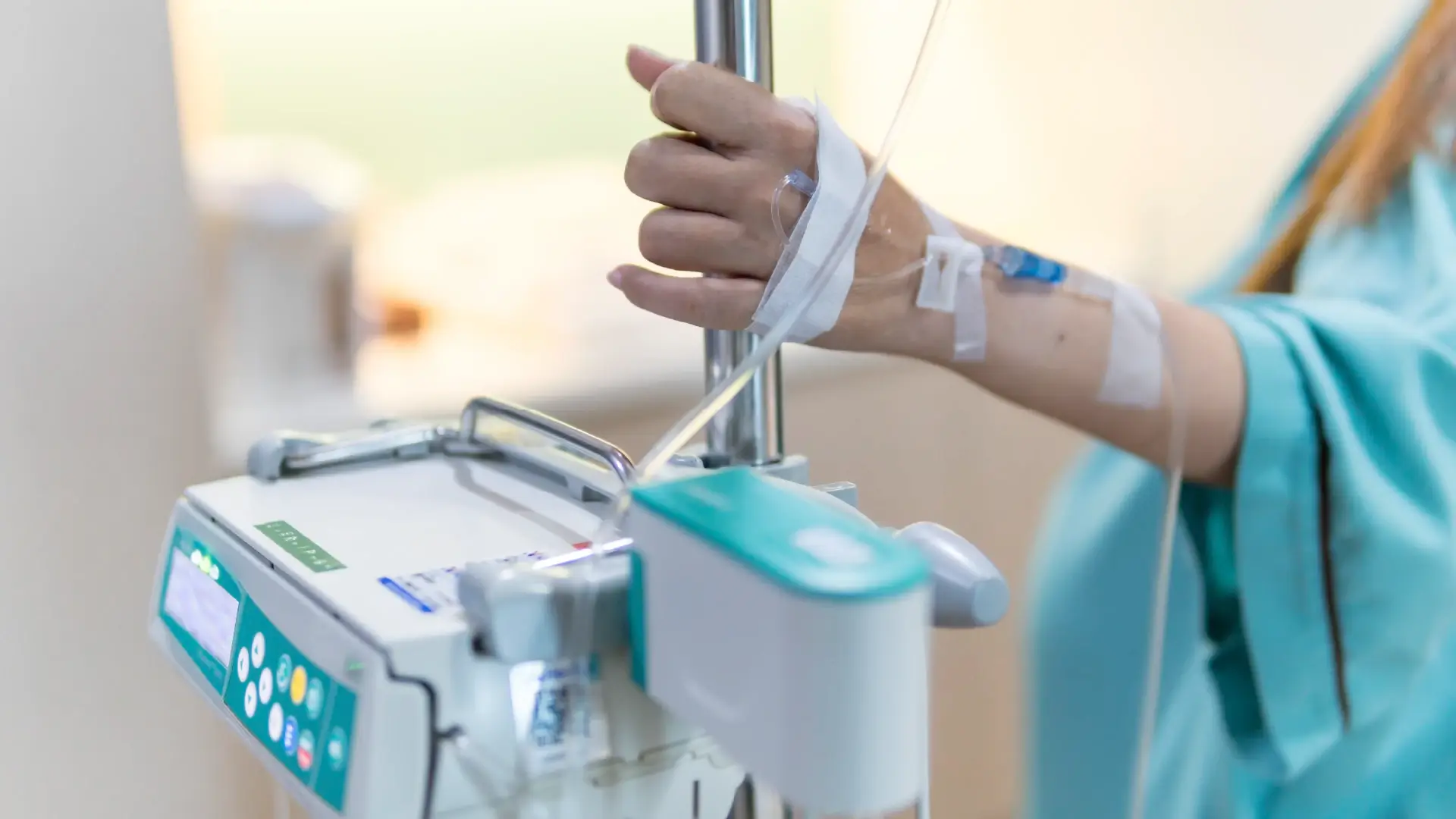
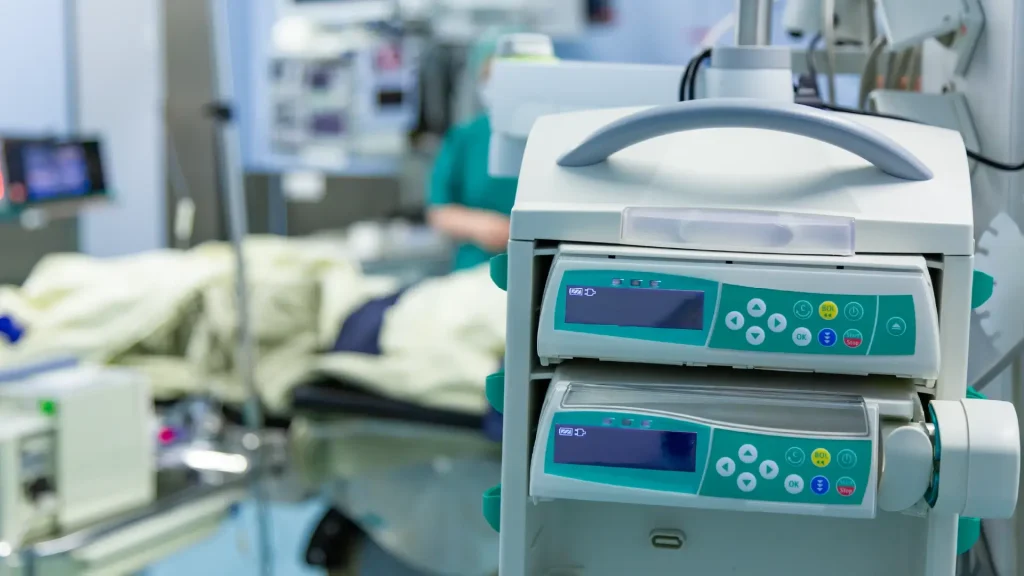
An infusion pump can appear to be a straightforward line item in a clinical trial protocol.
Identify the required device. Deliver it to the site. Begin treatment.
In practice, considerably more has to go right.
The pump must be appropriate for the therapy, dose, delivery route and care environment. It must be compatible with the required administration sets and accessories. It may need calibration, inspection, documentation, configuration or programming before use. The site must know how to operate it, respond to alarms and manage the device throughout the study.
In a global trial, those requirements must be repeated across different countries, sites, electrical systems, languages, regulations and clinical workflows.
That leads to a critical distinction:
An infusion pump arriving at a site does not mean the site is ready to use it.
The real objective is not equipment delivery. It is safe, consistent and protocol-aligned infusion across every participating site.
For CROs, sponsors and clinical operations teams, that means infusion pump planning must begin with the protocol and extend through sourcing, calibration, deployment, training, documentation and ongoing equipment oversight.
Key Takeaways
- Infusion pump selection must begin with the protocol, not the product catalogue. The drug, delivery route, required flow rate, care setting, accessories and participant population all influence which pump is appropriate.
- Calibration is only one part of infusion pump readiness. Equipment must also arrive with the correct documentation, consumables, configuration, power requirements and operational support.
- Infusion pump execution affects the participant experience. Delays, unfamiliar equipment and inconsistent processes can increase site burden and create additional friction for people already navigating a clinical trial.
Why Infusion Pumps Matter in Clinical Trials
Infusion pumps deliver controlled quantities of fluids, medications or nutrients to a patient. Depending on the study, they may be used to administer an investigational product, supportive therapy or another protocol-required treatment.
The U.S. Food and Drug Administration notes that infusion pumps are frequently used to administer critical fluids, including high-risk medications. Because of that role, equipment failures or use-related problems can have significant patient-safety implications. Many devices include alarms and other alerts intended to warn users of issues such as air in the line or an obstruction in the tubing.
Within a clinical trial, the equipment also sits at the intersection of several study requirements:
- Protocol adherence
- Dosing consistency
- Participant safety
- Site workflow
- Staff training
- Equipment accountability
- Data quality
- Regulatory and quality documentation
A delay or inconsistency in any one of these areas can create consequences beyond the equipment itself.
A site may have the investigational product but be unable to administer it. A pump may be available but incompatible with the specified tubing. Staff may receive the correct model without sufficient time or documentation to become comfortable using it. A device may reach the country but remain delayed by customs or importer requirements.
These are not merely procurement problems. They are clinical trial logistics problems.
Infusion Pump Selection Should Start with the Protocol
The first question shouldn’t be, “Which infusion pumps are available?”
It should be:
What must this study deliver, to whom, under what conditions and with what level of control?
Infusion pumps vary considerably in their intended use, operating characteristics and clinical applications. Selecting the right device requires translating protocol requirements into a detailed equipment specification.
That process may include reviewing:
- The investigational product or fluid being delivered
- Route of administration
- Required flow-rate range and accuracy
- Dose volume and infusion duration
- Continuous, intermittent or bolus delivery
- Adult, pediatric or other population-specific needs
- Single-channel or multi-channel requirements
- Portability and battery life
- Alarm and occlusion-detection requirements
- Drug-library or dose-error-reduction functionality
- Approved administration sets and consumables
- Cleaning and infection-control procedures
- Power supply and plug compatibility
- Data capture or connectivity requirements
- The environment in which the device will be used
The World Health Organization’s technical specifications distinguish among devices such as volumetric infusion pumps, syringe pumps and drop counters, each with different technical characteristics and clinical uses. WHO also emphasizes that the appropriate clinical use of a particular device remains a decision for qualified medical personnel.
This is why a model that worked for one study cannot automatically be carried into the next.
The right pump is the one that fits the therapy, protocol, population and site environment together.
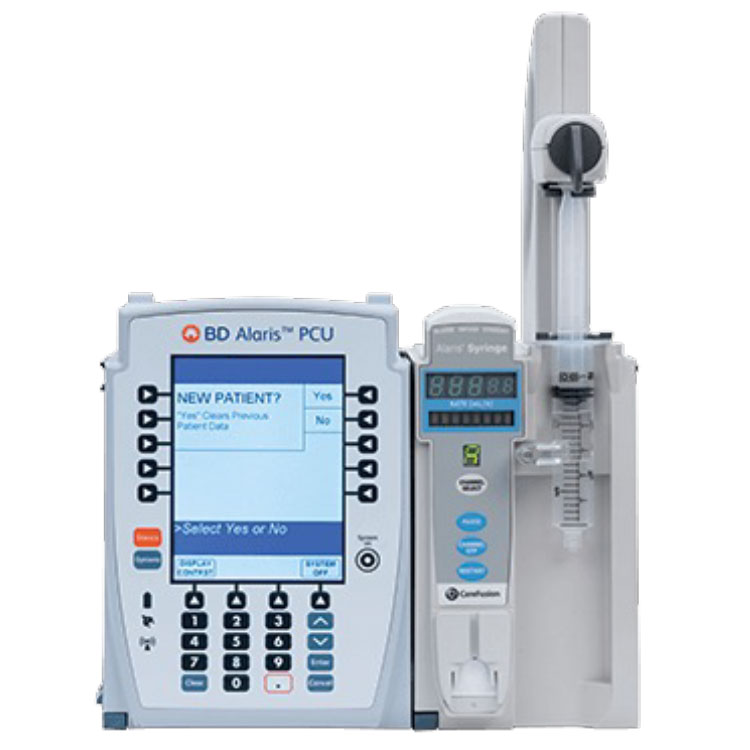
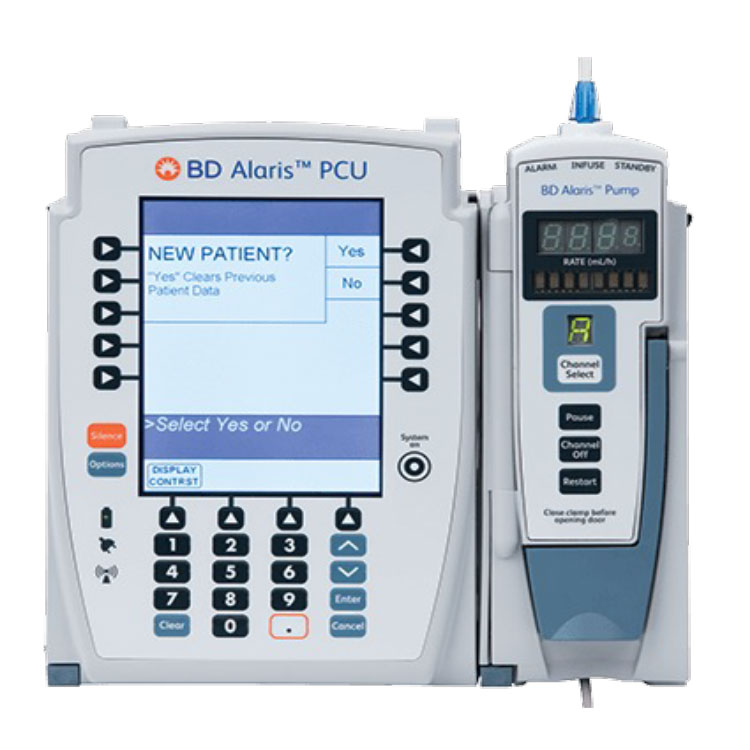
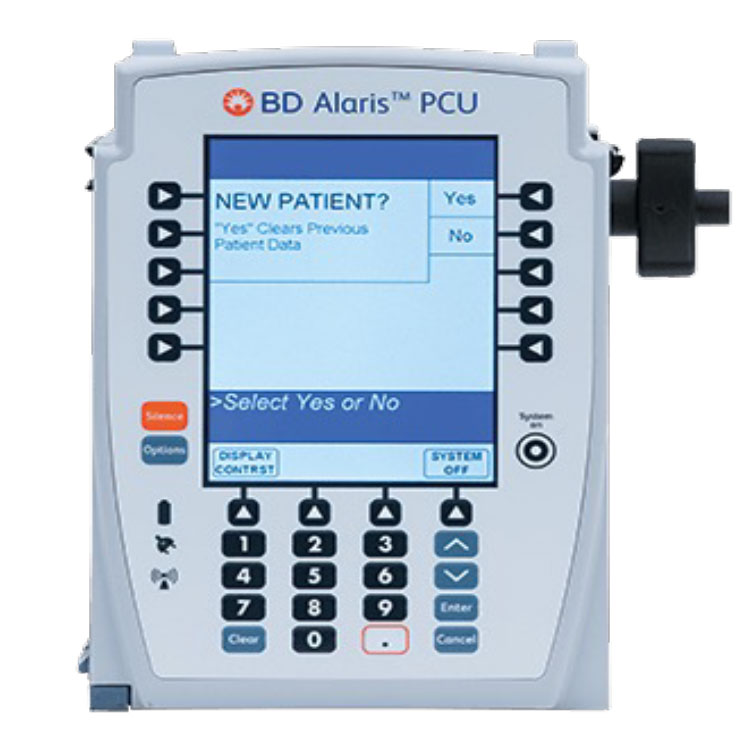
Common Types of Infusion Pumps Used in Clinical Research
The exact equipment mix will depend on the study, but several types of infusion pumps may be used in clinical trial settings.
Volumetric Infusion Pumps
Volumetric pumps are commonly used when fluids or medications must be delivered from a bag or container at a controlled rate. They may be appropriate for longer or higher-volume infusions and are often used in hospitals, clinics and dedicated research settings.
Syringe Pumps
Syringe pumps deliver smaller quantities of fluid from a syringe at controlled rates. They may be used when the protocol requires low-volume or highly controlled delivery.
Ambulatory Infusion Pumps
Ambulatory pumps are designed to support mobility while an infusion is taking place. Depending on the therapy and protocol, they may allow participants to receive treatment outside a conventional infusion chair or inpatient environment.
Patient-Controlled Analgesia Pumps
Patient-controlled analgesia pumps allow medication to be delivered within programmed limits when activated by the patient. Their use requires careful programming, training and clinical oversight.
Enteral Infusion Pumps
Enteral pumps deliver liquid nutrition or medication through the gastrointestinal tract rather than intravenously. The FDA defines enteral infusion pumps separately from devices used for vascular infusion.
Elastomeric Pumps
Elastomeric pumps use pressure generated by an elastic reservoir rather than an electronic pumping mechanism. Their portability can be useful in some care models, but flow performance may be influenced by operating conditions and device design.
The category name alone is not enough to make a selection. Even pumps of the same general type can differ in flow range, accuracy, approved tubing, alarm functionality, user interface, battery life and environmental requirements.
Planning infusion pump requirements for an upcoming study?
Axelerist can help translate protocol requirements into a complete sourcing, calibration and deployment plan.
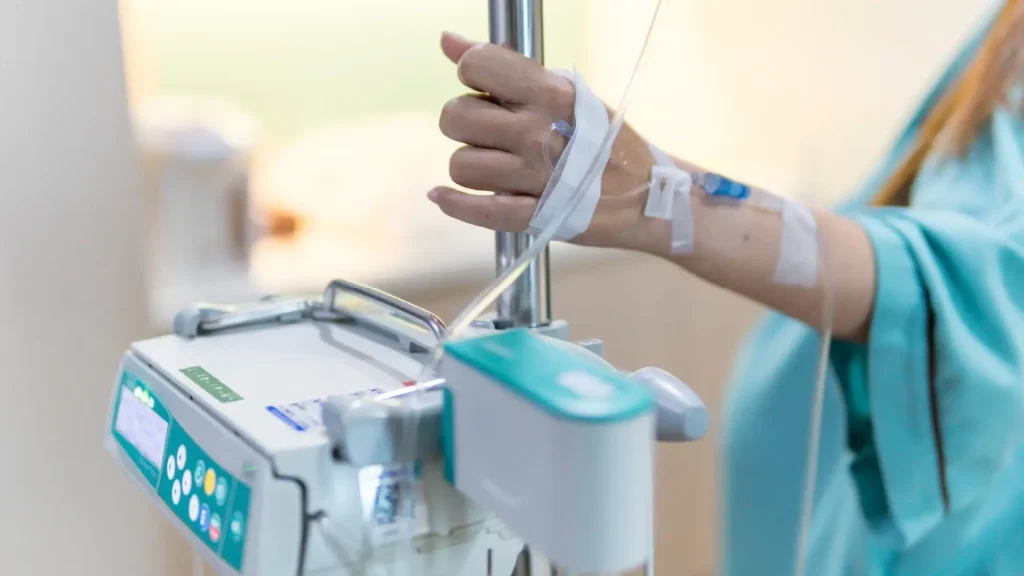
Common Types of Infusion Pumps Used in Clinical Research
Once the model has been selected, the work isn’t finished.
For the device to become operational at the site, multiple dependencies must be aligned.
1. The Pump and the Consumables Must Match
An infusion pump typically operates as part of a larger system that may include:
- Administration sets
- Tubing
- Syringes
- Cassettes
- Poles or mounting hardware
- Batteries and power supplies
- Carrying cases
- Filters
- Connectors
- Other manufacturer-approved accessories
A pump without its compatible consumables is not study ready.
This is especially important in global trials, where a particular administration set may not be stocked locally, may have a different product number or may face its own import and supply constraints.
The device and its disposables should therefore be planned as one integrated requirement, not as separate purchases.
2. The Configuration Must Match the Protocol
Some devices require programming, configuration or the installation of approved drug libraries before use.
For smart infusion pumps, dose-error-reduction software may provide additional safeguards, but its value depends on appropriate implementation, maintenance and use. The Joint Commission has emphasized that smart pump safety requires more than acquiring the technology; organizations also need appropriate processes, drug-library management, training and analysis of pump data.
In a clinical trial, the configuration process must also account for study-specific requirements and the responsibilities of the sponsor, CRO, investigator site and clinical staff.
3. Documentation Must Travel with the Equipment
Sites may require access to:
- Calibration or service documentation
- Certificates of conformity
- Manufacturer instructions for use
- Cleaning and maintenance instructions
- Equipment identification and serial numbers
- Shipping and receiving records
- Local-language materials
- Training documentation
- Equipment accountability records
Missing paperwork can make usable equipment operationally unusable.
Documentation should therefore be treated as part of the deployment, not as an administrative follow-up after the device has shipped.
4. Staff Need Time to Become Ready
Infusion pumps can differ in interface design, programming sequence, alarm language and troubleshooting requirements.
Even experienced clinicians may be unfamiliar with a particular model.
Sites need enough time to receive the equipment, inspect it, review instructions, complete required training and resolve questions before the first participant visit. When equipment arrives just before activation, the operational burden shifts to the site at the exact moment teams are already managing competing start-up priorities.
The pump may technically be on time while the site is still not ready.
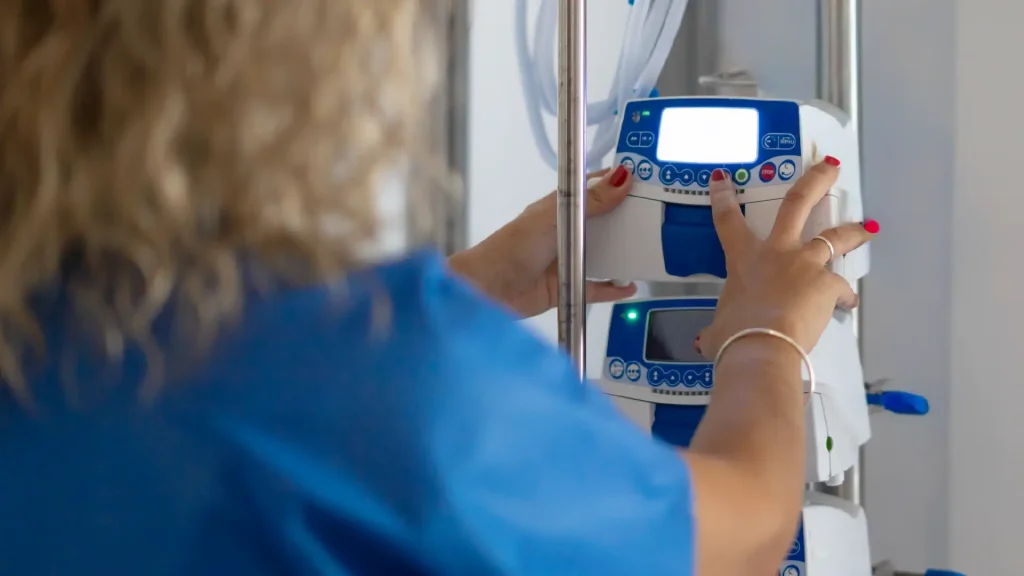
Infusion Pump Calibration and Performance Verification
Infusion pump calibration is often discussed as though it were a certificate that simply accompanies the device.
Its real purpose is much more important: helping establish that the device performs as intended within defined parameters.
Infusion pumps are responsible for delivering controlled volumes at specified rates. Accuracy can be influenced by the device, administration set, setup, operating environment and other conditions. Research evaluating infusion devices has found that flow-rate performance can vary and may be affected by factors such as pump configuration, pressure, height and the characteristics of the infusion set.
FDA-recognized standards include test methods intended to evaluate fluid-delivery performance across clinically relevant use conditions for syringe, container and volumetric infusion pumps.
For clinical trial teams, several practical questions matter:
- Does the pump require calibration or performance verification before deployment?
- What interval applies under the manufacturer’s instructions and the study’s quality requirements?
- Is the documentation current and traceable?
- Does testing cover the flow rates relevant to the protocol?
- Who is responsible for ongoing maintenance during a multi-year study?
- What happens if the pump is damaged, moved, repaired or returned?
- How will expired calibration be prevented across multiple sites?
- Is local calibration support available if the device cannot be moved easily across borders?
The answer will vary by device, manufacturer, jurisdiction and study.
Axelerist coordinates calibration and supporting documentation based on the equipment and project requirements. This can include arranging calibration before deployment, tracking calibration status and helping study teams manage equipment across the trial lifecycle.
The objective is not simply to check a compliance box.
It is to prevent a predictable equipment issue from surfacing at the site when time is limited and participants are waiting.
Why Global Trials Can Make Infusion Pump Planning More Complex
A single-country study may be able to standardize one model and supply pathway relatively easily.
A global trial introduces additional variables.
The preferred pump may not be commercially available in every market. Regulatory status can differ. Administration sets may have different product numbers. Power supplies and plug types change. Instructions may need translation. Local maintenance capabilities may be limited. Customs processes can delay equipment, replacement parts or consumables.
Clinical teams may therefore face a difficult choice:
- Standardize one model globally and manage the complexity of international deployment, or
- Use locally available equivalents and manage the complexity of harmonization
Neither approach is automatically right.
A standardized global model may simplify training and protocol consistency but increase shipping, customs and service risk. Local sourcing may improve speed and responsiveness but requires careful equivalency review, documentation and coordination.
The best strategy considers both clinical consistency and operational feasibility.
That is where early planning becomes especially valuable. Equipment teams can review country requirements, availability, lead times, local support, consumables and calibration pathways before they become activation barriers.
Global consistency does not always mean shipping the same box from one central depot. Sometimes it means creating the same dependable outcome through well-managed local execution.

Infusion Pump Readiness Is Part of Patient Centricity
Patient centricity is often discussed in terms of protocol design, informed consent, travel requirements and communication.
Those elements matter.
But the participant also experiences the operational quality of the trial.
They experience whether an appointment begins on time. Whether staff appear confident using the equipment. Whether treatment is delayed because the correct supplies are unavailable. Whether a device used at home is understandable, portable and appropriate for their daily life.
FDA guidance on decentralized clinical trials recognizes that remote and local trial activities may improve convenience, reduce participant and caregiver burden and expand access for people who have limited mobility or limited access to traditional research sites.
That promise depends on execution.
Sending an infusion pump into a participant’s home or local care environment adds new questions:
- Is the device appropriate for use outside a traditional site?
- Can the participant or caregiver understand the instructions?
- Is training accessible and documented?
- Is technical support available when it is needed?
- Can replacement equipment be delivered quickly?
- How will the device be cleaned, maintained and returned?
- Is battery life sufficient for the participant’s routine?
- Does the pump create unnecessary noise, weight or mobility restrictions?
- Who responds when an alarm occurs?
The more a trial moves toward the patient, the more carefully the equipment experience must be designed around that patient.
A portable pump alone does not make a trial patient centric.
The complete system around the pump does.
The Cost of Treating Infusion Pumps as a Late-Stage Procurement Task
When infusion pump planning begins too late, study teams may encounter:
- Models that do not meet protocol specifications
- Long manufacturing or sourcing lead times
- Equipment delayed in customs
- Incompatible tubing or consumables
- Missing calibration documentation
- Devices that cannot be serviced locally
- Different models arriving at different sites without a training plan
- Power or plug incompatibility
- Insufficient replacement inventory
- First-participant visits delayed by incomplete site setup
Each problem may appear small in isolation.
Together, they can slow site activation, increase coordination work and create pressure across clinical operations, procurement, quality and site teams.
Most importantly, they can affect when a participant receives a study treatment.
That is why infusion pump planning should begin as soon as the protocol requirements are sufficiently clear, particularly when the study spans multiple countries or uses specialized delivery parameters.
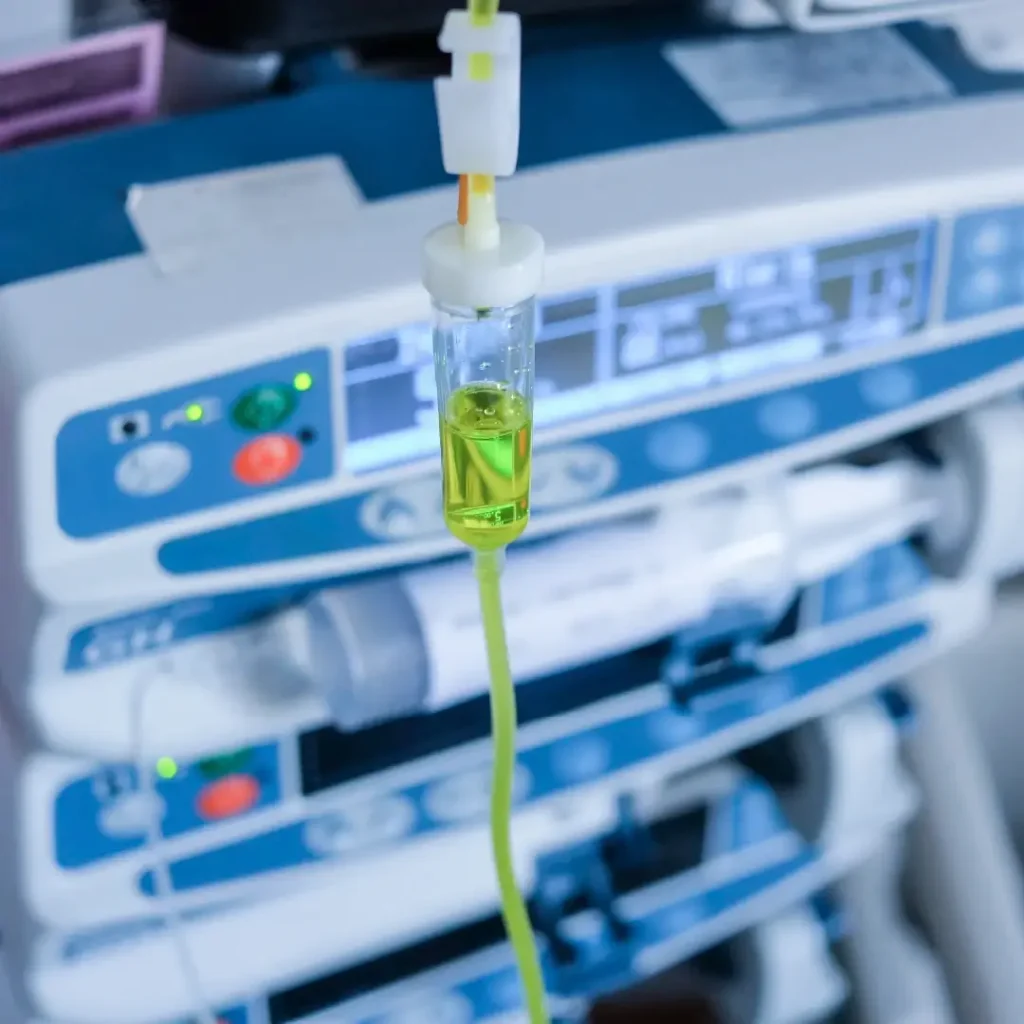
What CROs Should Look for in an Infusion Pump Partner
An effective clinical trial equipment partner should do more than locate a requested model.
The partner should understand what has to happen between the protocol requirement and the first successful infusion.
That includes the ability to:
Translate the Protocol into an Equipment Specification
The partner should help clarify the required pump type, flow parameters, accessories, quantities, deployment locations and lifecycle needs.
Source Globally and Locally
Central inventory can be useful, but local sourcing may reduce lead times, simplify replacement and provide greater flexibility in complex markets.
Coordinate Calibration and Documentation
The equipment should arrive with the records needed to support site acceptance and study requirements.
Manage Consumables and Accessories
Pump compatibility extends beyond the device itself. Required sets, tubing, syringes, mounts and power components should be included in the planning process.
Support Site Readiness
Shipping confirmation is not the same as readiness confirmation. The partner should help coordinate what the site requires to receive, inspect and prepare the equipment.
Provide Lifecycle Oversight
Longer trials may require recalibration, maintenance, replacement, retrieval, storage, redeployment or decommissioning.
Respond When the Plan Changes
Clinical trials rarely proceed without amendments, urgent requests, country additions, quantity changes or unexpected equipment issues.
The partner’s ability to solve non-standard problems may matter as much as the original equipment supply.
How Axelerist Supports Infusion Pump Deployment
Axelerist supports CROs, pharmaceutical companies and biotech teams with infusion pump sourcing, rental and deployment for clinical trials around the world.
Our work can include:
- Protocol-aligned equipment sourcing
- Infusion pump rental and purchase options
- Volumetric, syringe and ambulatory pump sourcing
- Accessory and consumable coordination
- Calibration and supporting documentation
- Global shipping and customs support
- Local and in-country sourcing
- Site-specific deployment
- Technical coordination
- Equipment tracking and lifecycle oversight
- Replacement and urgent-request support
- Equipment retrieval at study closeout
We coordinate the equipment-related steps required to move from protocol requirements to site readiness.
Because the goal is not simply to place an infusion pump at a site.
It is to make sure equipment is never the reason treatment cannot proceed as planned.
Conclusion: The Right Pump Is Only the Beginning
Infusion pumps play a direct role in how treatment is delivered during a clinical trial. That makes their selection, preparation and deployment more than a procurement exercise.
The device must fit the protocol. Its accessories must fit the device.
Its documentation must fit the study. Its configuration and training must fit the site.
And, increasingly, the complete experience must fit the needs of the participant.
When these elements are planned together, infusion pump deployment can become a dependable part of trial execution rather than another source of delay.
When they are handled separately or too late, even a relatively small equipment requirement can stand between a completed protocol and a site that is ready to treat patients.
The right infusion pump matters. Making it ready, available and usable wherever the trial is running matters just as much.
Common Questions About Infusion Pumps in Clinical Trials
What types of infusion pumps are used in clinical research?
Clinical trials may use volumetric pumps, syringe pumps, ambulatory pumps, patient-controlled analgesia pumps, enteral pumps or elastomeric pumps. The appropriate device depends on the required volume, flow rate, treatment duration, care setting and protocol.
Do infusion pumps need to be calibrated for clinical trials?
Calibration or performance verification requirements depend on the device, manufacturer instructions, applicable quality standards and study requirements. Study teams should confirm the required interval, documentation and responsibility for ongoing equipment maintenance before deployment.
What should be considered when selecting an infusion pump?
Key considerations include the medication or fluid, delivery route, flow-rate range, dose volume, accuracy requirements, infusion duration, participant population, portability, battery life, alarms, administration-set compatibility, power requirements and care environment.
Can the same infusion pump be used in every country?
Not always. Device availability, regulatory status, electrical requirements, consumables, language, servicing and import rules may vary by country. Global studies may use one standardized model or carefully reviewed local equivalents, depending on the protocol and deployment strategy.
Can Axelerist provide infusion pump rental for clinical trials?
Yes. Axelerist supports infusion pump rental, sourcing, calibration coordination, documentation, global deployment and lifecycle management for clinical trials.
How early should infusion pump planning begin?
Planning should begin once the protocol provides enough information to define the equipment requirement. Earlier planning is especially important for global studies, specialized pumps, large quantities, country-specific sourcing or trials requiring compatible consumables and site training.
Keep Infusion Pump Requirements from Becoming Site Delays
From equipment selection and calibration to consumables, customs and local deployment, Axelerist coordinates what is required to make infusion pumps study ready.