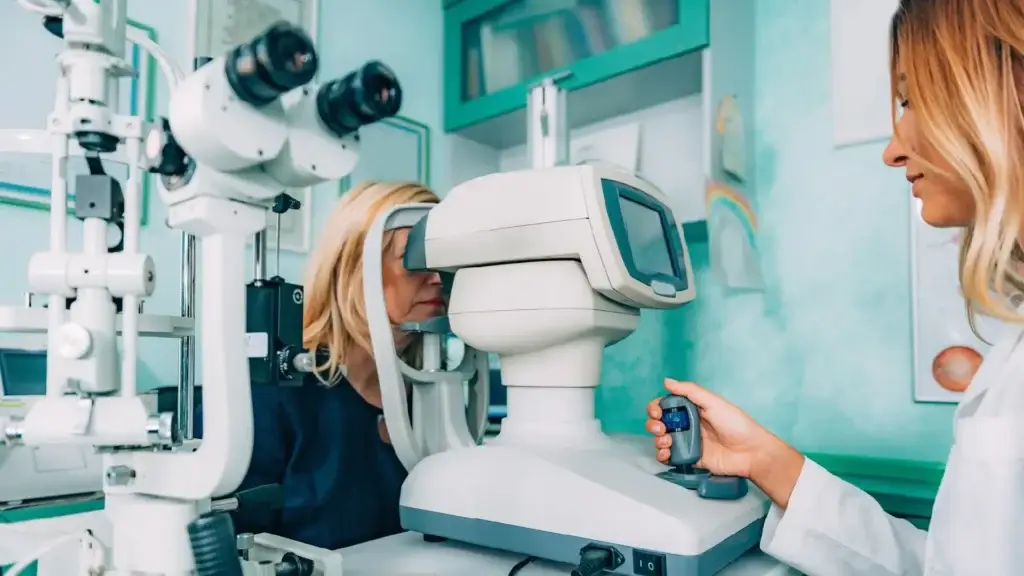
In an ophthalmology clinical trial, the equipment is not simply sitting in the room. It may be generating the images, measurements or functional assessments the study depends on.
That changes the equipment conversation.
When retinal imaging, optical coherence tomography (OCT), visual-function testing or other ophthalmic assessments contribute to trial endpoints, seemingly small differences between equipment, software, settings or acquisition procedures can introduce variability across sites.
FDA guidance on clinical-trial imaging endpoints emphasizes the importance of standardizing imaging equipment, acquisition parameters and, where relevant, hardware and software when imaging contributes to trial endpoints. The goal is not standardization for its own sake. It is to minimize avoidable imaging variability and improve the reliability and interpretability of trial data.
For CROs and sponsors, that means ophthalmology equipment rental for clinical trials can be more than a procurement or capital-expenditure decision.
Done well, an equipment rental strategy can help support consistency across sites, simplify equipment lifecycle management, improve replacement readiness and reduce operational friction from site activation through study closeout.
In other words: equipment can become part of how you protocol-proof the study.
Key Takeaways
- Ophthalmology equipment is not necessarily interchangeable. Different models and platforms can produce different measurements, image characteristics and outputs.
- Standardization goes beyond choosing the same device. Software versions, accessories, settings, acquisition protocols, documentation and operator procedures may also matter.
- Rental can support greater equipment control across a finite study. The value is not simply avoiding capital expenditure; it is creating a more manageable equipment lifecycle.
Why Are Ophthalmology Clinical Trials Different?
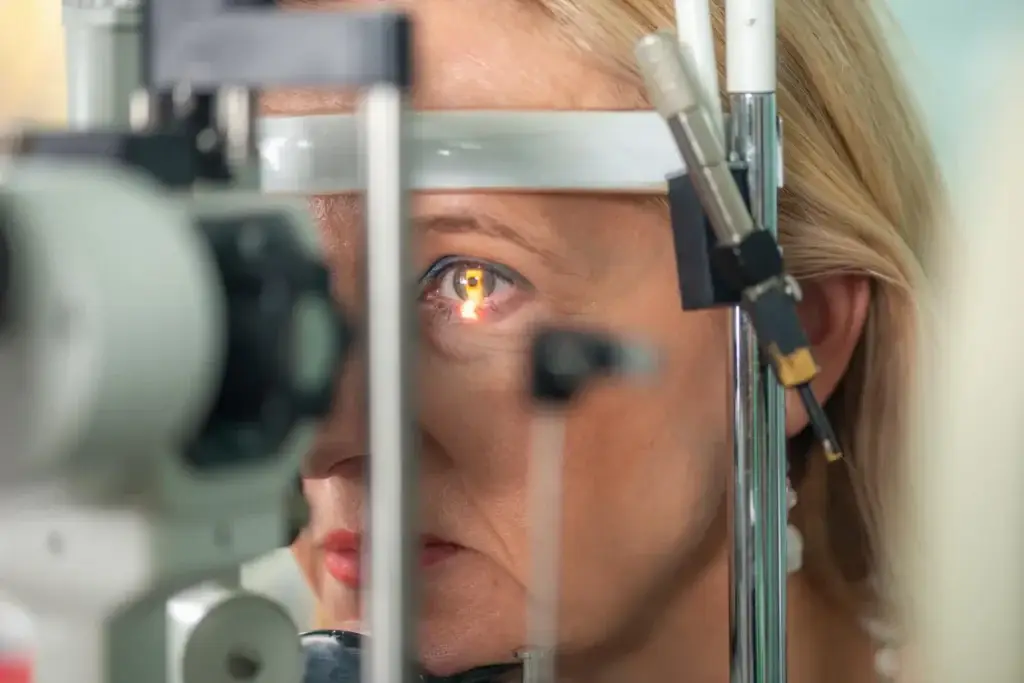
Ophthalmology studies can depend heavily on specialized diagnostic, imaging and visual-function equipment.
Consider the range of ophthalmology technologies a study may require.
- The ZEISS CLARUS 700, for example, supports ultra-widefield retinal imaging, True Color imaging and multiple fundus imaging modalities.
- The Topcon TRC-50DX is a mydriatic retinal camera that supports multimodal fundus imaging, including color, red-free and fluorescein angiography, with additional imaging modes available on certain configurations.
- The Heidelberg SPECTRALIS OCT platform with OCT2 supports high-resolution OCT imaging, with faster acquisition and active eye-tracking capabilities that contribute to repeatable imaging workflows.
- The AdaptDx Pro performs dark-adaptation testing, assessing the time required for retinal sensitivity to recover following exposure to adapting light.
- Slit-lamp systems, tonometers, visual-acuity equipment and other ophthalmic technologies introduce additional study-specific requirements.
These are not interchangeable boxes.
They perform different functions, produce different types of information and may have different technical, software, service, operator and protocol requirements.
Even devices performing the same general type of assessment may not produce directly interchangeable quantitative results.
That matters when the study is trying to distinguish an actual treatment effect from variation introduced by the measurement process.
Does Using Different OCT Equipment Really Affect Data Consistency?
It can.
Research comparing OCT systems has repeatedly demonstrated differences in retinal-thickness measurements between devices.
A study involving 272 participants with macular conditions compared measurements obtained using Spectralis, Optovue and Topcon OCT systems. While there was overall agreement, retinal thickness measurements varied between devices, and the authors recommended considering use of the same OCT model when monitoring clinical change.
Other studies have reached similar conclusions. Comparisons across multiple OCT platforms have found systematic differences in retinal-thickness measurements, with measurements from different devices not necessarily being directly interchangeable.
This is not merely a theoretical concern.
Ophthalmology reading-center literature has long emphasized the importance of approved equipment, standardized imaging protocols, instrument settings and site certification in multicenter trials. Central reading centers help reduce variability not only through consistent grading, but by establishing how images should be acquired at participating sites.
Reporting recommendations for quantitative OCT research similarly call for documenting the manufacturer, device model and software version, particularly in multicenter studies, as well as standardizing acquisition conditions.
The lesson for clinical operations teams is straightforward:
If the protocol depends on ophthalmic measurements, equipment strategy deserves to be considered alongside the measurement strategy.
Clinical Trial Equipment Standardization Is More Than Using the Same Model
Standardizing ophthalmology equipment does not simply mean sending every site a device with the same logo on the front.
Depending on the study, teams may need to consider:
- manufacturer and model
- hardware configuration
- software or firmware version
- accessories and lenses
- imaging or testing protocols
- acquisition settings
- calibration or verification status, where applicable
- installation requirements
- operator procedures and training
- documentation requirements
- connectivity and data-transfer requirements
FDA imaging guidance specifically recommends identifying important imaging equipment, platforms and software and notes that some functional and quantitative imaging tasks benefit from specific scanners and models. It also recognizes that software changes during a trial can affect how images are generated and potentially create changes that could be mistaken for clinical change.
That is an important distinction.
Same manufacturer does not necessarily mean same configuration.
And even the same device model does not eliminate every source of variability.
A standardized equipment strategy still needs standardized acquisition procedures, appropriate operator training, quality controls and protocol adherence.
In ophthalmology trials, consistency is created by the system around the equipment, not just the equipment itself.
Why Can Equipment Rental Support Standardization?
The obvious argument for ophthalmic equipment rental is financial.
A CRO or sponsor may not want to purchase specialized equipment for a study that will run for a limited period.
But focusing only on capital expenditure misses a larger operational opportunity.
A centralized ophthalmology equipment rental strategy can make it easier to:
- source a specified equipment model across multiple sites
- control configurations and accessories
- align service and documentation requirements
- maintain visibility into individual serial-numbered assets
- track where equipment is deployed
- manage service and maintenance dates
- plan replacement or exchange strategies
- recover equipment at study closeout
That does not mean rental automatically makes a trial more standardized.
It means rental can provide a structure for controlling equipment more deliberately across the study lifecycle.
Rather than asking each site to independently locate whatever equipment is locally available, the CRO or sponsor can define what is acceptable and work with an equipment partner to execute against those requirements.
That becomes particularly valuable when an ophthalmology protocol requires a specific model or configuration that may not already exist at every participating site.
Calibration, Verification and Maintenance Are Different Things
Another common source of confusion is the assumption that all clinical trial equipment simply needs to be “calibrated.”
It is more nuanced than that.
Formal calibration, verification, functional service and preventive maintenance serve different purposes, and not every ophthalmology device necessarily requires the same combination.
- Calibration evaluates measurement performance against an appropriate reference or standard.
- Verification can confirm that specified requirements have been met.
- Preventive maintenance focuses on maintaining reliable operation and reducing the risk of equipment failure.
Other manufacturer-recommended inspections, functional checks or service activities may also be required.
The appropriate approach depends on the device, intended use, manufacturer guidance, study protocol and sponsor or site requirements.
That distinction matters in ophthalmology because highly specialized devices may require different forms of ongoing technical oversight.
A retinal imaging system, tonometer, slit lamp and dark adaptometer should not automatically be managed through one generic “calibration” process.
The better question is not simply:
“Is this equipment calibrated?”
It is:
“What does this specific device need to demonstrate that it is ready and appropriate for its role in this study?”
What Happens When Ophthalmology Equipment Fails Mid-Study?
Equipment strategy becomes even more important when something goes wrong.
- A device can fail.
- A component can require replacement.
- Technical support may become unavailable.
- A software update can affect the approved configuration.
- A site may close.
- A study may add a new geography.
The question then becomes: what is the replacement strategy?
For equipment contributing to quantitative imaging or longitudinal assessments, substituting a different platform without planning can create more than a logistics problem.
FDA guidance explicitly recommends anticipating equipment malfunctions and changes during clinical trials and establishing when equipment or modality substitutions are acceptable. It also cautions that unplanned changes can compromise trial objectives when quantitative imaging measurements are involved.
For OCT specifically, the evidence around inter-device variability makes replacement planning especially important.
Where a study requires consistency of model, configuration or software version, replacement equipment may need to meet those same requirements.
If that exact configuration is unavailable, the sponsor may need to determine what alternative is acceptable and whether additional qualification, documentation or a new baseline is required.
That conversation is much easier to have before the equipment fails.
A robust ophthalmology equipment plan should therefore consider:
- replacement inventory
- backup sourcing options
- local service capability
- expected repair turnaround
- replacement-unit configuration
- recalibration or verification requirements
- shipping and customs implications
- study documentation
- procedures if the original model becomes unavailable
This is where ophthalmology equipment strategy and clinical trial logistics intersect.
The equipment partner is not simply responsible for getting a device to the site.
The real operational question is whether the partner can help keep the study moving when something changes.
Global Ophthalmology Trials Add Another Layer of Complexity
A five-site study in one country is one equipment challenge.
A 30-site ophthalmology trial across North America, Europe and Asia is another.
Availability can vary by geography. So can:
- local model availability
- service capabilities
- accessories
- power requirements
- language requirements
- shipping restrictions
- import and customs requirements
- technician support
- replacement timelines
- documentation expectations
Trying to solve every issue through centralized international shipping can introduce unnecessary friction.
In some circumstances, local or regional sourcing may offer a faster or more practical route, provided the required equipment specifications and study controls can still be maintained.
As we explore in Clinical Trial Logistics: What CROs Need to Keep Trials Running Across Global Sites, strong global execution increasingly depends on combining centralized oversight with the ability to solve problems closer to the site.
The objective is not simply global reach.
It is consistent execution across different local realities.
Treat Ophthalmology Equipment as an Asset With a Technical History
One of the most useful shifts CROs and sponsors can make is to stop treating clinical trial equipment as something that is simply ordered, shipped and returned.
Treat it as a study asset with a documented technical history.
For an individual device, that history may include:
- manufacturer and model
- serial number or asset identifier
- hardware and software configuration
- manuals and technical documentation
- warranty information
- certificates of conformity or analysis, where applicable
- calibration, verification and service documentation
- maintenance history
- accessories deployed with the device
- deployment location
- repair or replacement events
- return and recovery history
This creates continuity.
If a monitor asks what equipment was at a site, the answer is available. If a device moves, its history moves with it. If a replacement is required, the team can understand the configuration it needs to match. If a service date is approaching, it can be identified before it becomes an activation or visit-day problem.
The equipment is no longer simply a shipment. It is a managed asset supporting study execution.
Why Ophthalmology Equipment Rental Can Make Sense for Clinical Trials
For specialty ophthalmology studies, rental can offer several advantages over purchasing equipment independently for each site.
Greater flexibility for finite studies
The equipment requirement may last only as long as the study. Rental allows teams to align equipment access more closely with the trial timeline rather than purchasing assets that may have limited use afterward.
More control over equipment standardization
Where a protocol calls for specific equipment, a coordinated rental model can help CROs and sponsors deploy approved models, configurations and accessories more consistently across sites.
Easier lifecycle management
Rental can place sourcing, deployment, service coordination, replacement planning and recovery within one equipment-management model rather than leaving individual sites to manage those activities independently.
Replacement flexibility
Specialty equipment failures can disrupt scheduled assessments. Access to replacement sourcing and equipment exchange capability can reduce the operational burden when failures occur.
Access to specialized equipment
Not every site will own every ophthalmology system required by every protocol. Rental and specialized sourcing can help fill that gap without forcing every site or sponsor to purchase highly specialized equipment.
And if the exact device is not readily available, an experienced equipment partner may be able to procure the required model through a broader supplier network.
The strongest argument for rental, then, is not simply:
“Why buy when you can rent?”
It is:
“How do we create the equipment consistency, flexibility and lifecycle control this study requires?”
Questions CROs and Sponsors Should Ask Before Renting Ophthalmology Equipment
Is the same equipment model available across all study countries?
If the protocol or imaging charter requires a specific model, confirm availability early. Where identical equipment cannot be supplied everywhere, determine what alternatives are acceptable before activation.
Are the hardware configurations and software versions controlled?
For some quantitative imaging applications, software and configuration differences may affect outputs. These requirements should be understood before devices are deployed.
Does the equipment require calibration, verification or preventive maintenance?
Do not assume those terms mean the same thing. Establish the specific service requirement for each device and how it will be documented.
How is service status tracked throughout the study?
Know who is monitoring service dates, maintenance requirements, repair events and any documentation that may need renewal during a long-running study.
What happens if equipment fails during a patient visit or mid-study?
Ask about troubleshooting, service availability, spare inventory, replacement sourcing and how quickly an equivalent device can be deployed.
Can equipment be serviced or replaced locally?
For global trials, local capability can reduce downtime and avoid unnecessary international shipping, provided study requirements can still be maintained.
How are technical documents maintained?
Confirm how manuals, warranties, service records, certificates and other required documents are associated with the individual device and made available throughout the study.
Who manages the asset after deployment?
Someone needs to maintain visibility from sourcing and configuration through deployment, service, replacement and recovery.
What happens if the exact device specified by the protocol is not in inventory?
Ask about specialized sourcing capability. Inventory should be the starting point, not necessarily the limit of what can be procured.